
If a new knitter asks me what kind of project looks “fanciest” with the least amount of effort, I immediately point them to a slip stitch pattern. Once you know how to knit and purl, adding a slip stitch to your knitting technique arsenal opens a huge array of impressive-looking stitch patterns. And the technique itself is so simple: Just slip the loop from one needle to the next!
When you slip a stitch without knitting or purling, it creates an elongated stitch. The more rows you slip the stitch, the longer that stitch will be. In a single-colored pattern, this is a great way to add texture without any fuss. For example, here is a Brocéliande headband (Ravelry Link) I made as a gift for a friend:
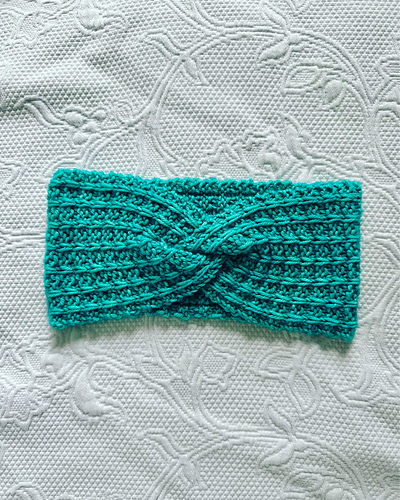
The stripes of elongated stitches are created using slip stitches interspersed in a knit and purl pattern. It was simple to memorize and quick to knit, but the resulting texture gave so much character to the piece! And elongated stitches help break up any pooly on the hand-dyed Malabrigo yarn I used – so this technique is PERFECT for tonal and variegated yarns.
Equally easy, but even more complex working, is slip stitch colorwork. When working slip stitch colorwork, you only knit one color at a time. Combined with using elongated stitches, this can be an excellent way to create textured, complex colorwork that’s actually very easy to knit!
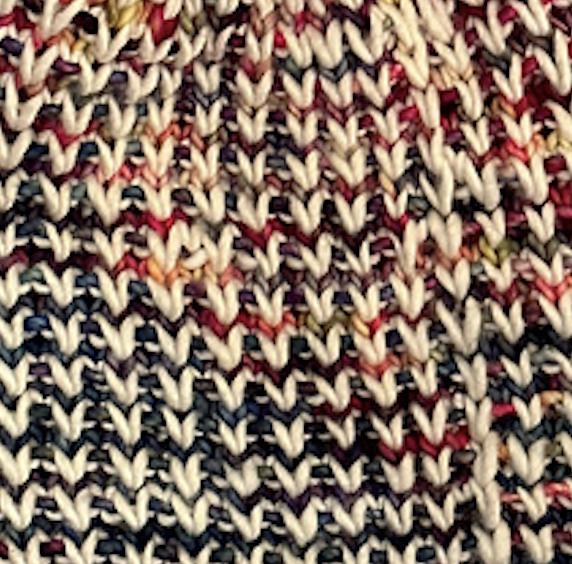
In the Carmel Beanie (Ravelry Link) pictured above, I alternated a variegated yarn with a solid off-white yarn. The result not only broke up the pooling of variegated yarn, but gave a complicated-looking texture that was easy as knits, purls, and slip stitches! No fancy colorwork charts to follow, just a simple pattern repeat.
If you don’t elongate stitches, you can still use slip stitch colorwork to create Mosaic colorwork designs like the ones used in this gorgeous Lisa Hannes shawl (Ravelry Link).
Some tips for if you’re getting started with slip stitch:
- Read the stitch pattern or look at the chart several times to make sure you understand the patterning. Many slip stitch patterns are easy to memorize, so understanding how they work will make it easy to “read” your knitting if you lose your place.
- Unless a pattern specifies otherwise, slip all your stitches purlwise. In other words, put your right needle in the loop on your left needle as if you’re going to purl, but instead of purling just slip the loop over.
- As with any kind of knitting, don’t tense up your hands too much. You want things tidy, but not too tight!
Some resources to check out if you want to get started:
- Barbara Walker’s” A Treasury of Knitting Patterns” Series – Ms. Walker’s stitch dictionaries are the best of the best, but my favorite part are the huge number of slip stitch patterns. Whether solid-colored, textured colorwork, or Mosaic, her books have plenty of options to pick from if you’re designing your own project.
- The Colorwork Bible – I always recommend this book knitters wanting to get started with colorwork. Each section tackles a different technique and includes a swatch so you can practice the technique quickly before using it in a lengthier project.
- Nimble Needles Mosaic Knitting Tutorial on Youtube – If you learn better from videos, Nimble Needles is one of my favorite YouTube channels for almost any technique. His Mosaic knitting video is excellent!
- Slip Stitch versus Mosaic Knitting – Literal Master Knitter Heather Storta explains the difference between the terms “slip stitch knitting” and “mosaic knitting.” Great for understanding techniques that used slip stitches more thoroughly.
Leave a Reply